Why dosage matters in male fertility supplements
One of the most overlooked aspects of fertility supplements is dosage. Many supplements include ingredients that are linked to sperm health, but the amounts used are often far below the levels studied in clinical research. As a result, the ingredients may look impressive on the label but are unlikely to have meaningful biological effects.
My experience with fertility supplements
Here's something that really annoyed me when I was researching how to tackle my fertility issues: fertility supplements on the market are often expensive placebos.
When I first started trying to improve my fertility, I assumed the more supplements I took, the better.
I was buying multiple brands, stacking capsules, and assuming that if an ingredient was included on the label it must be present in the right amount.
It turns out that assumption was wrong.
What I eventually discovered was that many fertility supplements which did include the right ingredients did so at doses too small to match what the research actually uses.
The problem with proprietary blends
Walk into almost any supplement shop and you’ll find fertility formulas boasting 20 or 30 ingredients.
They’re often hidden behind something called a “proprietary blend.”
This means the company lists the ingredients, but doesn’t tell you how much of each one is included.
That creates a problem.
They're cramming tiny amounts of everything into one capsule, giving you 50mg of something that needs 200mg to work, or 5mg of something that requires 100mg. By calling it a proprietary blend, they basically mask how much of each ingredient is used.
On paper, the supplement looks comprehensive.
In reality, it may be delivering very little.
Male Fertility Supplements: Are they worth it?
What clinical research doses often look like
Scientific studies investigating male fertility typically use specific dosage ranges.
For example:
CoQ10: Studies showing sperm improvements use 200-300mg daily. Most supplements will only include it at 30mg.
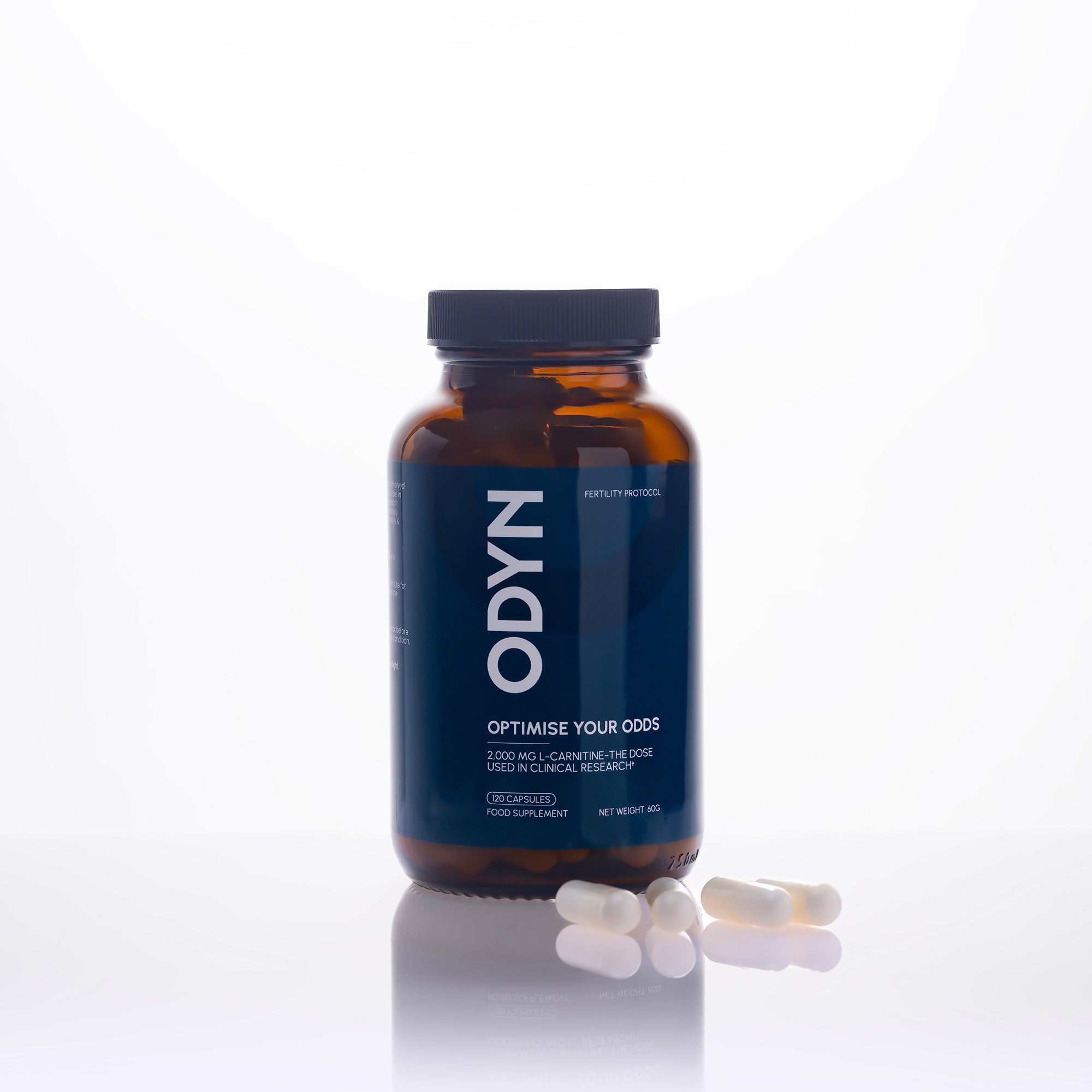
L-Carnitine: Clinical trials used 2-3g daily for measurable sperm motility improvements. Your average fertility blend? Maybe 250mg if you're lucky.
Lycopene: Studies showing improved sperm concentration and motility use 25mg daily. Most fertility supplements? They don't include it at all, or give you a measly 1-2mg that won't do anything.
The ranges vary between studies, but they illustrate an important point:
The amount matters just as much as the ingredient itself.
When doses fall far below these ranges, it becomes much less likely that the supplement will produce meaningful changes.
Check out all the ODYN Fertility Protocol Ingredients (at doses that matter).
Why many supplements are underdosed
There are several practical reasons supplements end up underdosed.
Higher doses often mean:
- larger capsules
- higher ingredient costs
- shorter ingredient lists
From a marketing perspective, however, long ingredient lists can appear more impressive.
So instead of focusing on a small number of well-studied ingredients, some formulas include dozens of ingredients at very small amounts.
This creates the appearance of a “complete formula,” even if the doses are unlikely to match those used in research.
In summary, they sprinkle in microscopic amounts of 33 different ingredients, slap "COMPLETE FERTILITY FORMULA MAX PLUS" on the label, boast that it has more ingredients and charge a premium price.
Why more isn’t always better
Now, before you go mental and start mega-dosing everything, it’s also important to understand that simply increasing doses indefinitely isn’t the solution either.
Many nutrients have optimal ranges, and excessively high intakes can be counterproductive.
For example:
- Selenium is often studied at around 200 mcg daily, but much higher intakes may have negative effects.
- Vitamin E can be helpful at moderate levels but excessive doses may not provide additional benefit.
This is why thoughtful formulation matters.
The goal isn’t to take as much as possible. It’s to take the right nutrients at the right doses.
Learn how to improve sperm quality here.
What to look for in a fertility supplement
If you’re evaluating supplements, a few things are worth checking:
- Transparent ingredient amounts
- Doses aligned with scientific research
- A focused formula rather than an extremely long ingredient list
- Clear explanations of why each ingredient is included
These factors often matter far more than how many ingredients appear on the label.
Where ODYN fits
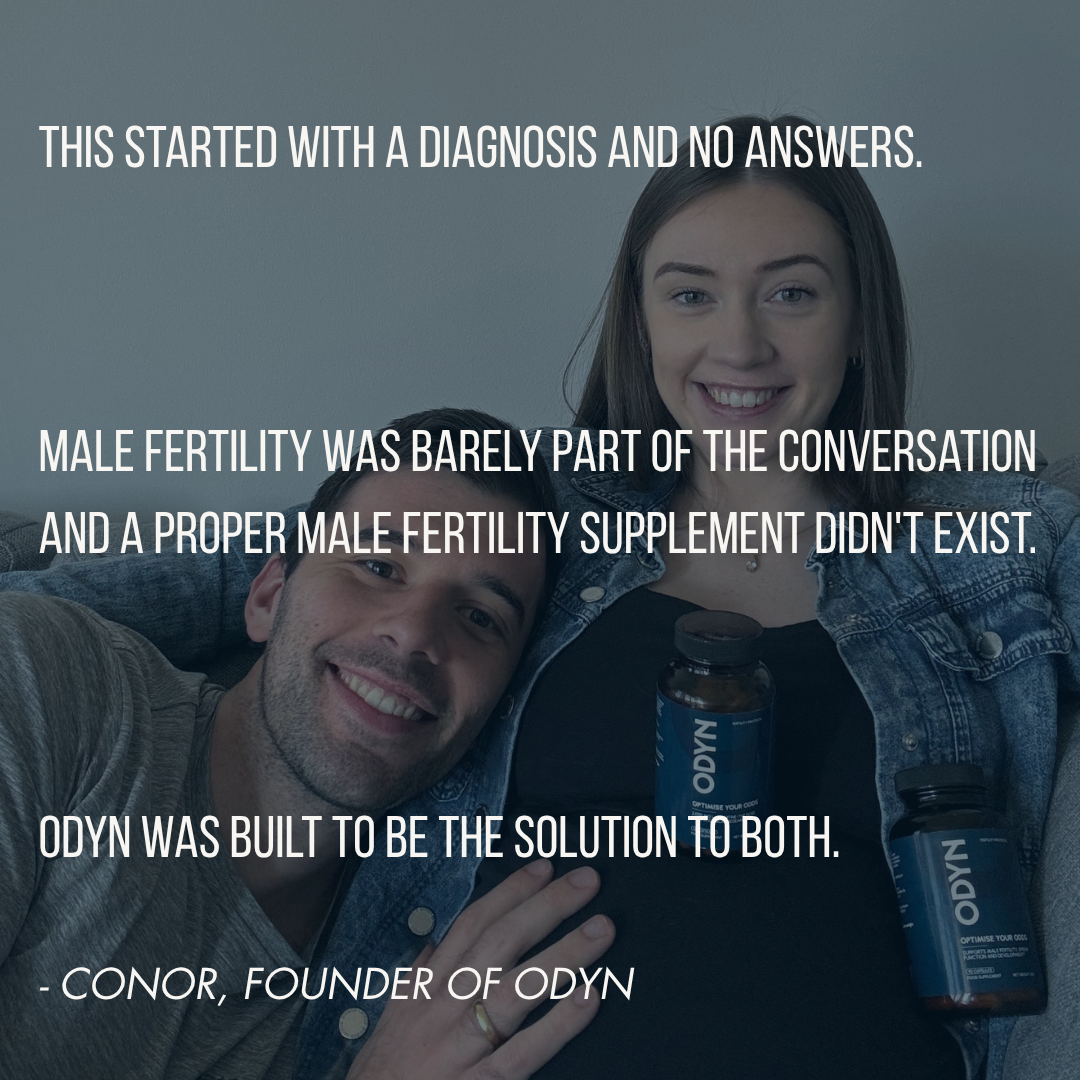
ODYN was created because I struggled to find supplements that actually matched the research.
Instead of building a long ingredient list, the goal was to focus on a smaller number of well-studied nutrients at clinically meaningful doses.
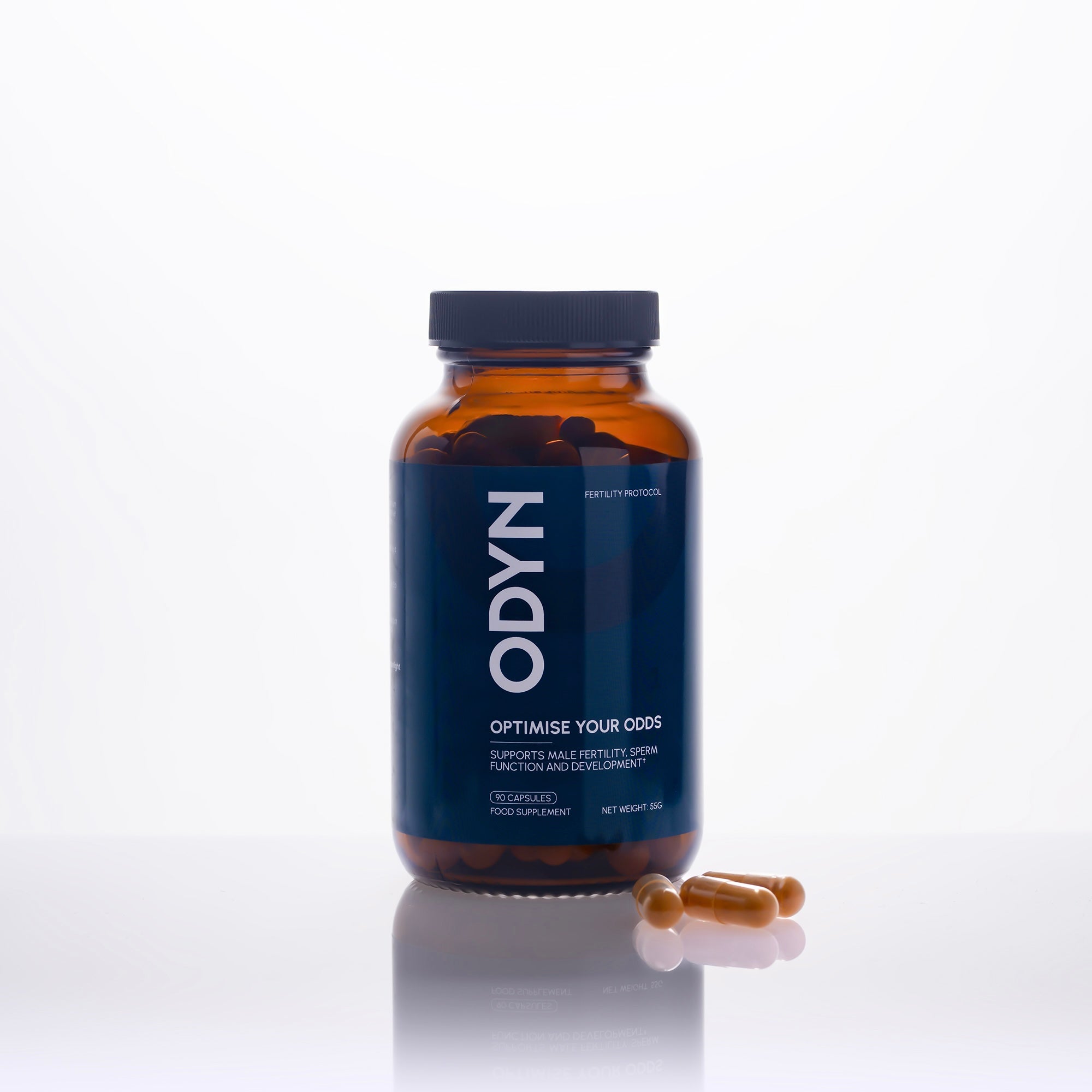
The ODYN Fertility Protocol is built around 10 ingredients including:
- L-Carnitine (2,000 mg)
- CoQ10 (300 mg)
- Lycopene (25 mg)
- Zinc (25 mg)
- Selenium (200 mcg)
Each ingredient is included based on research relating to sperm health, and the protocol is structured around a 90-day timeframe that reflects the sperm development cycle.
You can explore the full ingredient breakdown here: ODYN Fertility Protocol
The takeaway
In male fertility supplements, the dose matters just as much as the ingredient.
A long ingredient list may look impressive, but without meaningful amounts it may have little practical impact.
If you’re considering supplements, focus less on how many ingredients are included and more on whether those ingredients are provided at levels consistent with scientific research.
Because when it comes to fertility, clarity and evidence matter far more than marketing claims.
Frequently asked questions
Why do fertility supplements use proprietary blends?
Proprietary blends allow companies to list ingredients without revealing the exact amount of each one. This can make it difficult to assess whether the ingredients are present at meaningful doses.
Do higher doses always mean better results?
Not necessarily. Many nutrients have optimal dosage ranges, and excessively high doses may not provide additional benefit.
How long do supplements take to affect sperm quality?
Sperm take roughly 74 days to develop, which means changes in sperm health typically appear after 2–3 months of consistent supplementation and lifestyle changes.