Male fertility refers to the ability of sperm to fertilise an egg and contribute to a healthy pregnancy. Doctors usually assess this using a semen analysis, which measures sperm count, motility, morphology, and sometimes DNA integrity. While results can be worrying at first, sperm health is not fixed and can change over time depending on health, lifestyle, and nutrient status.
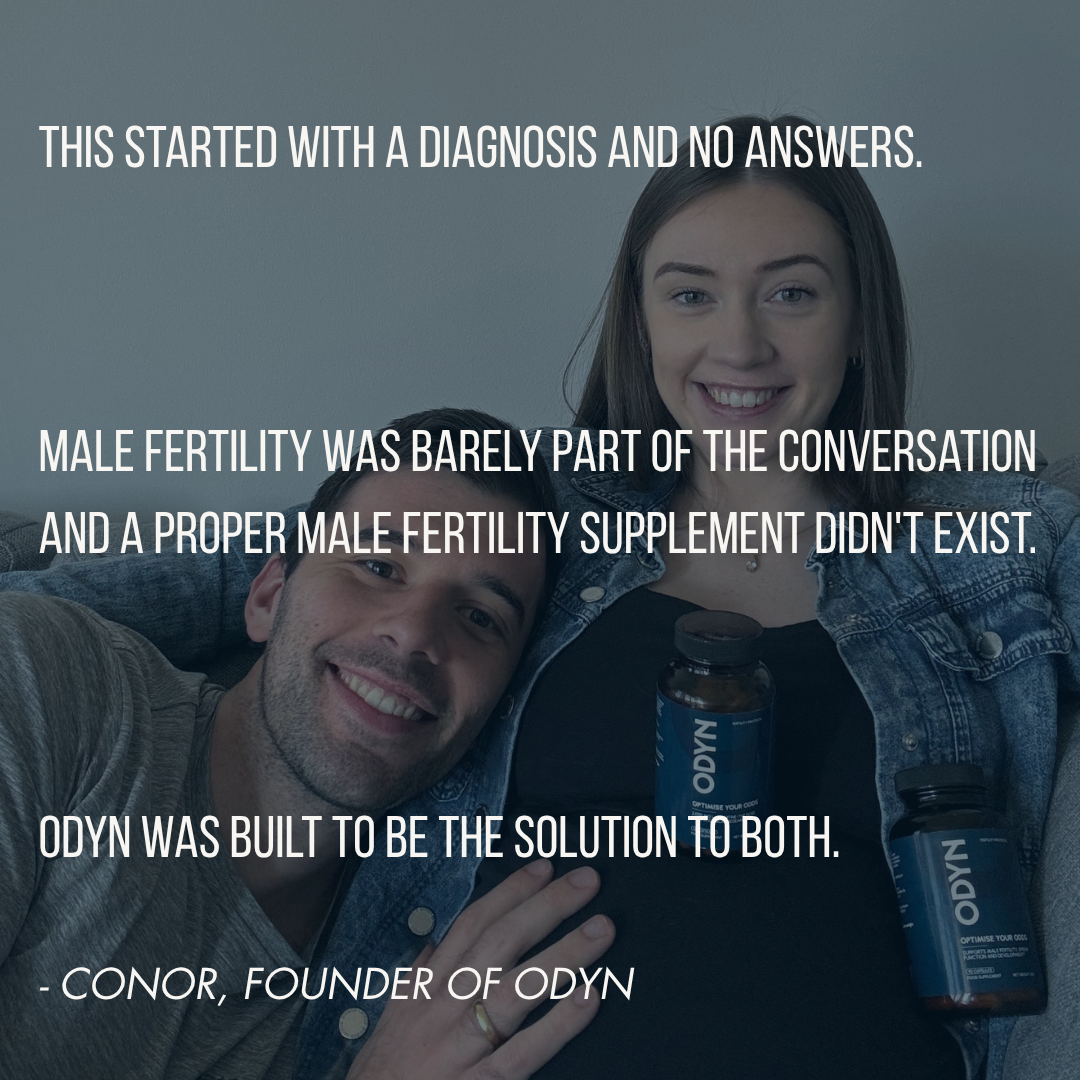
I didn’t think I’d ever need to understand male fertility. Then I got a semen analysis: followed by a wave of shame, new medical terms and then a lot of silence around what I could do next.
This page exists because I know how unsettling that moment can be, and how little clear, practical information there is when you start looking for answers. Below, I’ll try break down what male fertility problems actually mean, what affects sperm health, and what we can realistically do to try improve things.
What does male fertility mean?
When doctors talk about male fertility, they’re usually referring to a semen analysis. On paper, it can look cold and clinical. In reality, it’s just a snapshot of how sperm are behaving at that moment in time.
Most results come down to four main areas:
| Parameter | What it measures | Why it matters |
|---|---|---|
| Sperm count | Number of sperm in the sample (Concentration x Volume) | Higher counts increase the chances of fertilisation |
| Motility | How well sperm move | Sperm must swim to reach the egg. Here "progressive" motility matters most. |
| Morphology | Shape of sperm | Abnormal shapes may struggle to fertilise an egg |
| DNA integrity | Health of genetic material | Damage may affect embryo development |
I remember staring at these categories for the first time. It was this overpowering feeling of shame and not being a "real" man. I remember obsessing that my morphology was 0% and thinking that was the final verdict. What helped, eventually, was realising that male fertility isn’t black and white. It’s not fertile versus infertile. It sits on a spectrum and is constantly changing (and can be changed).
Common male fertility issues
If being told you are infertile isnt bad enough, the powers that be decided to make the diagnostic labels SUPER reassuring....
-
Low sperm motility (asthenozoospermia) - I had this
Sperm struggle to move efficiently, making it harder to reach and fertilise an egg. More information here. -
Poor sperm morphology (teratozoospermia) - I also had this
A higher-than-average number of sperm have abnormal shape or structure. More on morphology here. Important to note here: At home sperm tests CANNOT test for this! It has to be via your doctor or a lab (learn more) -
Low sperm count
Fewer sperm than expected are present in the sample. Oligospermia means a low sperm count (under 15 million/mL), while azoospermia means no sperm. More on concentration and volume here. -
Sperm DNA damage / fragmentation
The genetic material inside the sperm is compromised, even when other parameters look acceptable. This can also only be tested via a doctor or lab. Learn more here -
Unexplained male factor infertility
Results hover around reference ranges without a clear single cause. Interestingly, I did read of a case where a couple were diagnosed with this - only to later find out that she was allergic to his sperm.
Fun fact, if you have both of the two issues like I had - then you get "Asthenoteratozoospermia" - not intimidating AT ALL.
What affects sperm health?
One of the biggest misconceptions I had early on was assuming my sperm were just a "fixed" part of my body - like my height or hair colour. But I was wrong - they are actually sensitive little fellas.
Sperm are shaped by what’s happening in the body weeks and months before they’re ever tested. Over time, I learned how sensitive they are to both internal and external stressors, including:
-
Oxidative stress
-
Lifestyle habits like alcohol, smoking, poor sleep, and inactivity
-
Diet and micronutrient status
-
Heat, illness, fever, and inflammation
-
Stress and hormonal disruption
-
Time - sperm health reflects the last three months, not the last few days
This was a turning point for me. It reframed sperm health from something mysterious to something I could influence, even if not fully control.
Can sperm quality improve naturally?
In many cases, yes. But not in the way most people hope.
Sperm are constantly being produced, which means they’re also renewable. Improvements are possible when damaging factors are reduced and supportive conditions are sustained over time.
That said, it’s important to be honest:
-
Not every case improves
-
Results vary significantly
-
There are no guarantees
When I was first diagnosed I assumed my issues were now just a "given". That something went wrong within my body and now I was stuck with this diagnosis. I took me a while to realise that while there is no "cure" or magic pill, it wasn't something I had to accept.
Learn what factors can actually improve sperm health
Why time and patience matter
Sperm take roughly 74 days to develop and mature.
This means:
-
What you do today affects sperm you’ll see tested months from now
-
Short-term changes rarely show up in results
-
Random efforts tend to underperform structured ones
How Long Does It Take to Improve Sperm Quality?
Understanding this timeline removed a lot of pressure for me. It replaced the need to urgently find a "cure" with something far more useful but difficult to master: patience and consistency.
Supplements and sperm health: what to know
Like many men, supplements were one of the first things I looked at. However, it was also one of the most confusing.
What became clear over time:
-
Long ingredient lists often hide low doses and include "filler" to seem impressive
-
Antioxidants can support sperm health, but they’re not magic
-
Supplements work best alongside lifestyle changes, not instead of them
-
How something is dosed matters just as much as what’s included
The problem isn’t that supplements don’t work. It’s that many are built to look impressive rather than to do something meaningful.
Male Fertility Supplements: Are They Worth It?
Key Takeaways
-
Male fertility is usually assessed using a semen analysis
-
Key parameters include count, motility, morphology, and DNA integrity
-
Sperm take roughly 74 days to develop
-
Sperm health reflects the previous few months of health and lifestyle
-
Improvements are possible, but results vary and take time
Where ODYN fits
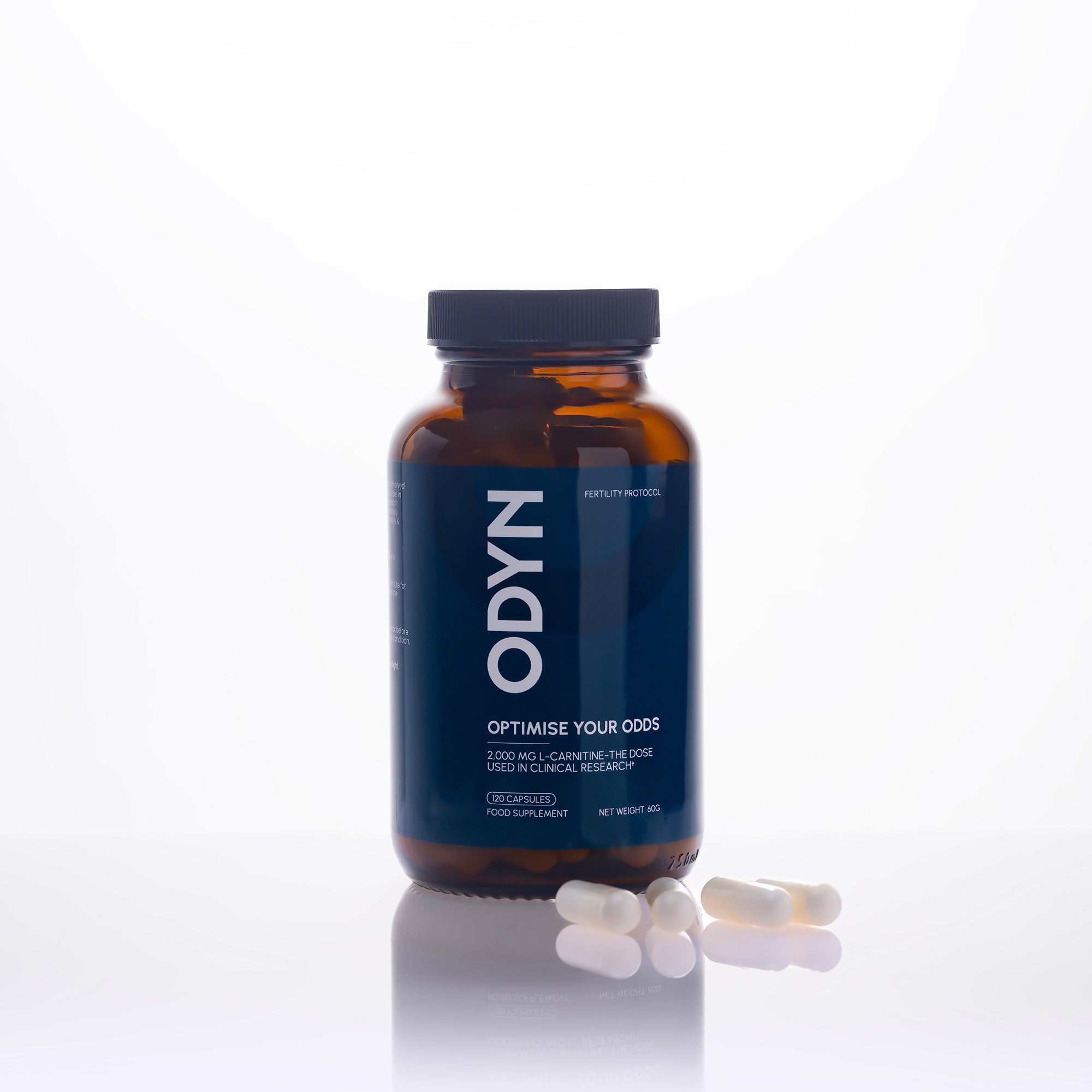
ODYN exists because I wanted something I couldn’t find when I needed it. So I had to build it myself.
At the time, I was taking close to 14 different tablets a day and spending a small fortune just to hit doses that were actually backed by evidence. It wasn’t convenient. It wasn’t elegant. But it worked.
That experience made something very clear: there was a better way to do this.
ODYN was created so other men wouldn’t feel stuck choosing between expensive, overcomplicated formulas full of filler ingredients, trying to build own stack at significant expense or feeling that there was nothing they could do.
No hype.
No filler ingredients or grand claims.
And no promises of overnight change.
Instead, ODYN is built around:
-
A 90-day timeframe that respects how sperm actually develop
-
Clinically meaningful doses, not label-padding
-
Supporting sperm health as a process, not a quick win
It’s not a guarantee, and it’s not for everyone. It’s for men who want a structured, evidence-led way to take responsibility for their side of the equation.
Explore the ODYN Fertility Protocol
A final word
Male fertility problems are more common than most people realise. They’re just rarely talked about openly.
If you’re here, you’re already doing something important: trying to understand what’s actually going on. From there, decisions tend to become calmer, clearer, and far less reactive.
That’s where progress usually starts. Well done and best of luck!
Frequently Asked Questions
What is considered a normal sperm count?
According to the World Health Organization (WHO) 2021 guidelines*, a sperm concentration of 16 million sperm per millilitre or higher falls within the reference range observed among fertile men.
However, fertility is not determined by sperm count alone. Some men with lower counts conceive naturally, while others with higher counts may still experience fertility challenges.
What is considered normal sperm motility?
Sperm motility refers to how well sperm move.
The WHO reference range suggests that 42% or more of sperm showing total motility falls within the range typically observed in fertile men.
Within that, around 30% or more progressive motility (sperm moving forward in a purposeful direction) is considered within the reference range.
What is considered normal sperm morphology?
Morphology refers to the shape and structure of sperm.
The WHO reference range suggests that 4% or more sperm with normal shape falls within the range observed among fertile men.
This number often surprises people. Morphology is assessed using very strict criteria, so even healthy samples typically contain many sperm that don’t meet the “perfect shape” definition.
What is considered normal semen volume?
Semen volume refers to the amount of fluid produced during ejaculation.
The WHO reference range suggests 1.4 mL or more is typical among fertile men.
Lower semen volume can sometimes occur due to dehydration, incomplete sample collection, hormonal factors, or issues affecting the reproductive tract.
What about sperm DNA fragmentation?
DNA fragmentation measures damage to the genetic material carried by sperm.
Unlike other semen parameters, the WHO manual does not define a single reference value for DNA fragmentation, because different laboratories use different testing methods.
Many fertility clinics consider fragmentation levels below roughly 20–25% to be favourable, though interpretation varies depending on the test used.
If my results fall outside these ranges, does that mean I’m infertile?
Not necessarily and this is what took me longest to come to terms with.
Semen analysis results can vary between samples, and fertility exists on a spectrum rather than a simple “fertile vs infertile” label.
Doctors often recommend repeating a semen analysis after 8–12 weeks, because sperm take around 74 days to fully develop, meaning results can change over time.
Can sperm quality improve over time?
Yes. Because sperm are continuously produced, lifestyle changes and nutrient support can influence the quality of newly produced sperm.
How long does it take to improve sperm health?
Sperm take roughly 74 days to develop, so improvements usually take 2–3 months to appear.
Do male fertility supplements work?
Some nutrients with antioxidant or metabolic roles may support sperm health, particularly when deficiencies are present. However, supplements work best alongside lifestyle improvements.
*Source: World Health Organization. WHO Laboratory Manual for the Examination and Processing of Human Semen (6th Edition, 2021).