Which supplements actually support sperm health?
Male fertility supplements are everywhere. Search online and you’ll see hundreds of products promising to improve sperm count, motility, or fertility in general.
But when you start looking closely, something becomes obvious: many supplements contain long ingredient lists but very small doses.
The ingredient itself might be useful, but the amount included often doesn’t match what scientific research actually uses.
This page explains which nutrients are most commonly studied for sperm health, what roles they play in the body, and why dosage matters far more than the length of the ingredient list.
Why nutrients matter for sperm health
Sperm development is a complex biological process that relies on several systems working properly at the same time.
These include:
- cellular energy production
- antioxidant protection
- DNA synthesis and repair
- hormone signalling
- cell division during sperm formation
Because sperm cells are constantly being produced, they are particularly sensitive to oxidative stress and nutrient availability during development.
This is why certain micronutrients and compounds have been studied in relation to male reproductive health.
L-Carnitine
One of the most widely studied compounds in male fertility research is L-Carnitine.
L-Carnitine plays a key role in transporting fatty acids into mitochondria, where they are used to produce energy. Because sperm cells rely heavily on mitochondrial energy to power movement, this pathway is particularly important for sperm motility.
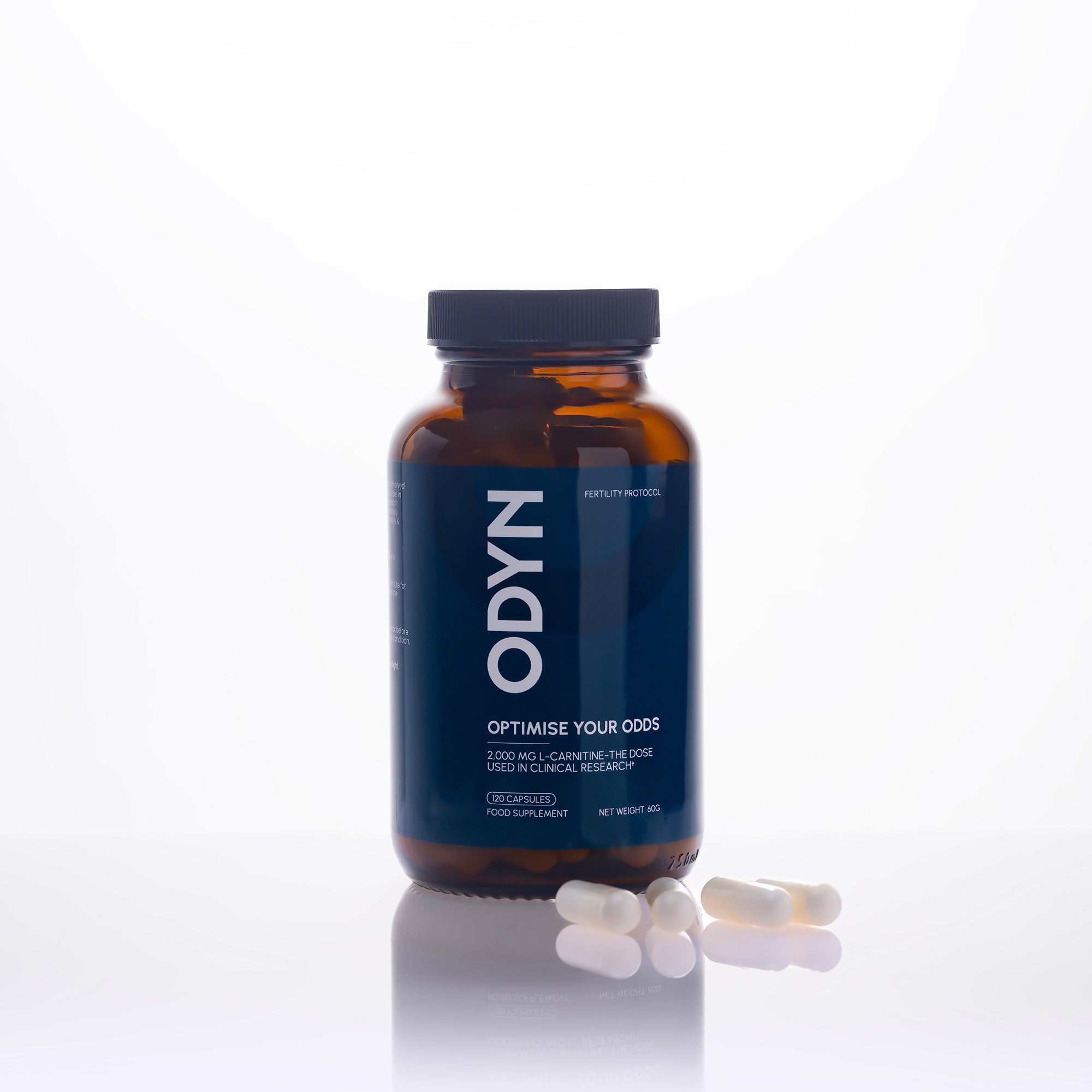
Several clinical trials investigating L-Carnitine supplementation have examined its potential role in supporting sperm parameters, often using doses between 2–3 grams per day.
Supporting studies†
†L-Carnitine does not have an authorised EU health claim. The following is provided for scientific and educational purposes only.
- A large randomized, double-blind, placebo-controlled trial with 175 men assessed daily L-Carnitine supplementation for six months, reporting changes in sperm motility, vitality, and volume, along with reductions in DNA fragmentation.
- Multiple studies have examined L-Carnitine over periods of 3–6 months, observing differences in sperm parameters such as motility, concentration, and morphology.
Learn more about sperm movement here: Low Sperm Motility Explained
Coenzyme Q10 (CoQ10)
Coenzyme Q10 (CoQ10) is another nutrient commonly discussed in male fertility research.
CoQ10 plays an important role in mitochondrial energy production, helping cells generate ATP, the energy currency of the body.
Because sperm require large amounts of energy to move effectively, researchers have examined whether CoQ10 supplementation may influence sperm function.
Clinical studies investigating CoQ10 in male fertility research have typically used doses between 200–300 mg per day.
Supporting studies†
†CoQ10 does not have an authorised EU health claim. The following is provided for scientific and educational purposes only.
- A double-blind, placebo-controlled study involving 212 infertile men found that 300mg daily CoQ10 for 26 weeks resulted in positive changes to sperm density and motility. A subsequent trial with 228 men using the reduced form of CoQ10 at 200mg daily also noted improvements in sperm and motility.
- A comprehensive systematic review and meta-analysis of 3,819 patients across multiple studies found overall positive trends in sperm motility and other parameters.
Lycopene
Lycopene is a carotenoid antioxidant naturally found in tomatoes.
Antioxidants help neutralise oxidative stress, which is frequently discussed in research investigating sperm health. Sperm cells are particularly vulnerable to oxidative damage during development, which is why antioxidants such as lycopene have been studied in male fertility research.
Clinical studies examining lycopene and sperm parameters have commonly used doses around 25 mg per day.
Supporting studies†
†Lycopene does not have an authorised EU health claim. The following is provided for scientific and educational purposes only.
- A randomized, double-blind, placebo-controlled trial with 44 men assessed 25 mg daily lycopene for 12 weeks, reporting changes in sperm count, concentration, and antioxidant capacity.
- Another controlled study involving 60 men observed differences in sperm motility and morphology after supplementation.
- A systematic review summarised trials reporting positive trends in sperm parameters and antioxidant markers.
Zinc and male reproductive health
Zinc is an essential trace mineral involved in a wide range of biological processes, including immune function, hormone regulation, and cellular division.
Zinc contributes to normal fertility and reproduction, and supports the maintenance of normal testosterone levels in the blood. It contributes to the normal function of the immune system and helps protect cells from oxidative stress. Zinc also has a role in the process of cell division.*
*Authorised health claims per the EU Register of Nutrition and Health Claims.
Typical supplementation levels used in studies range between 15–30 mg daily.
Supporting studies
Comprehensive research has examined zinc’s role in male reproductive physiology and its relationship with hormone regulation, immune function, and antioxidant defence. Clinical studies have explored zinc supplementation in men, including its impact on serum testosterone, sperm parameters, and immune markers
Selenium and sperm development
Selenium is another trace mineral frequently discussed in male fertility research.
Selenium contributes to normal spermatogenesis and supports the normal function of the immune system. It contributes to the protection of cells from oxidative stress and plays a role in the maintenance of normal hair and nails.*
*Authorised health claims per the EU Register of Nutrition and Health Claims.
Many clinical studies examining selenium in reproductive health have used doses around 200 mcg daily.
Supporting studies
- A prospective clinical study with infertile men receiving 200 mcg selenium daily for six months reported changes in sperm concentration, motility, and antioxidant capacity, along with reductions in sperm DNA fragmentation.
- Another large study involving selenium combined with vitamin E for at least 100 days observed differences in sperm morphology, motility, and antioxidant status.
Why dosage matters
One of the biggest issues in the fertility supplement market isn’t necessarily the ingredients themselves.
It’s the dose.
Many supplements include long ingredient lists, but because so many nutrients are squeezed into one capsule, the amount of each ingredient becomes extremely small.
For example:
- CoQ10 may appear at 30 mg instead of 300 mg
- L-Carnitine may appear at 200 mg instead of 2,000 mg
- Lycopene may appear at 1–2 mg instead of 25 mg
On paper, the supplement looks impressive.
In reality, those amounts may be far below the levels used in clinical research.
Why Supplement Dosage Actually Matters
The problem with “kitchen sink” formulas
Another common (and frustrating) pattern in fertility supplements is extremely long ingredient lists. Some formulas include 20–30 ingredients.
The problem with this approach is that it often leads to:
- small doses of each ingredient
- reliance on proprietary blends
- ingredients included mainly for marketing appeal
In many cases, a smaller number of well-studied nutrients at meaningful doses may make more sense than extremely complex formulas.
This is something I go into in more detail here:
The Wild West of Men’s Fertility Supplements
Where ODYN fits
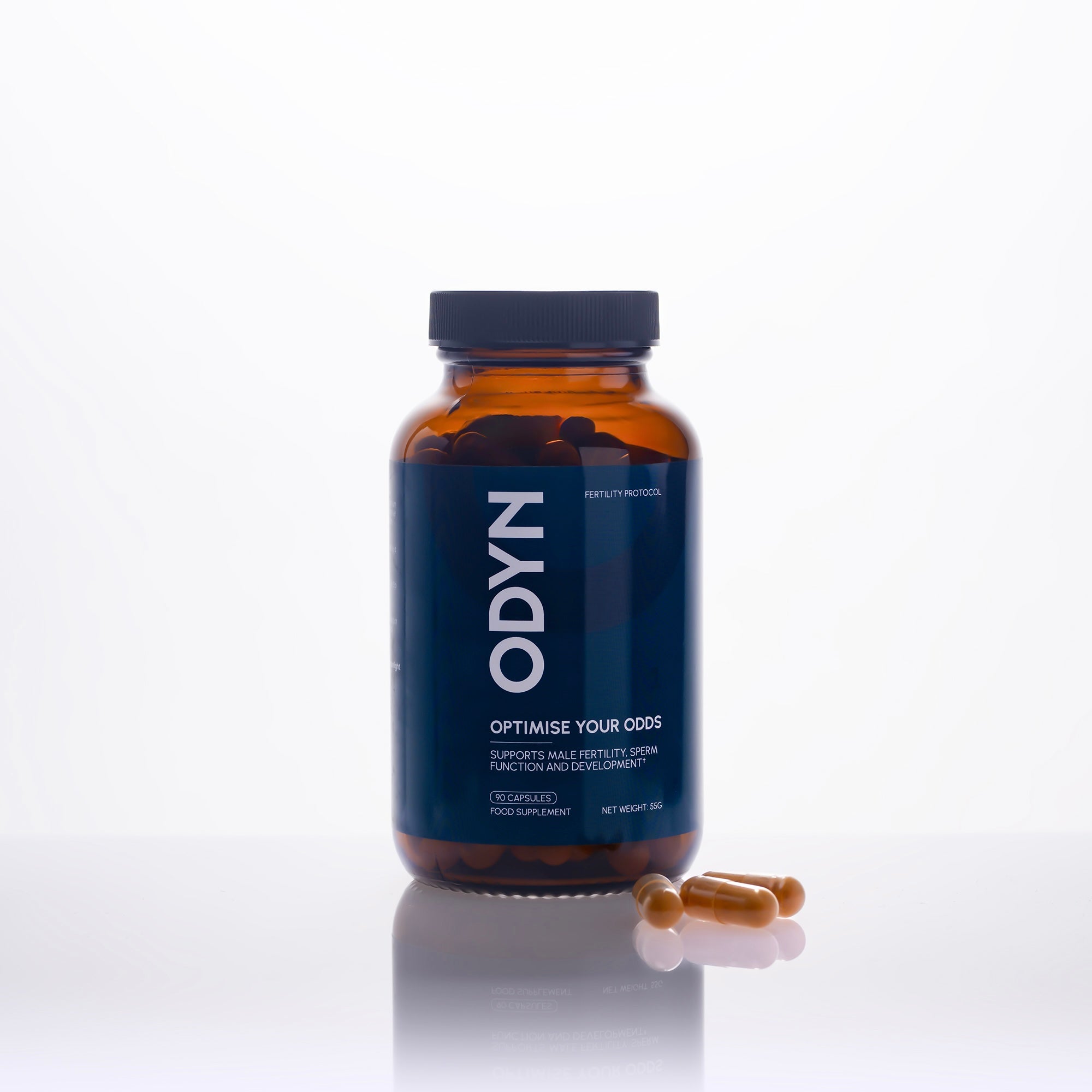
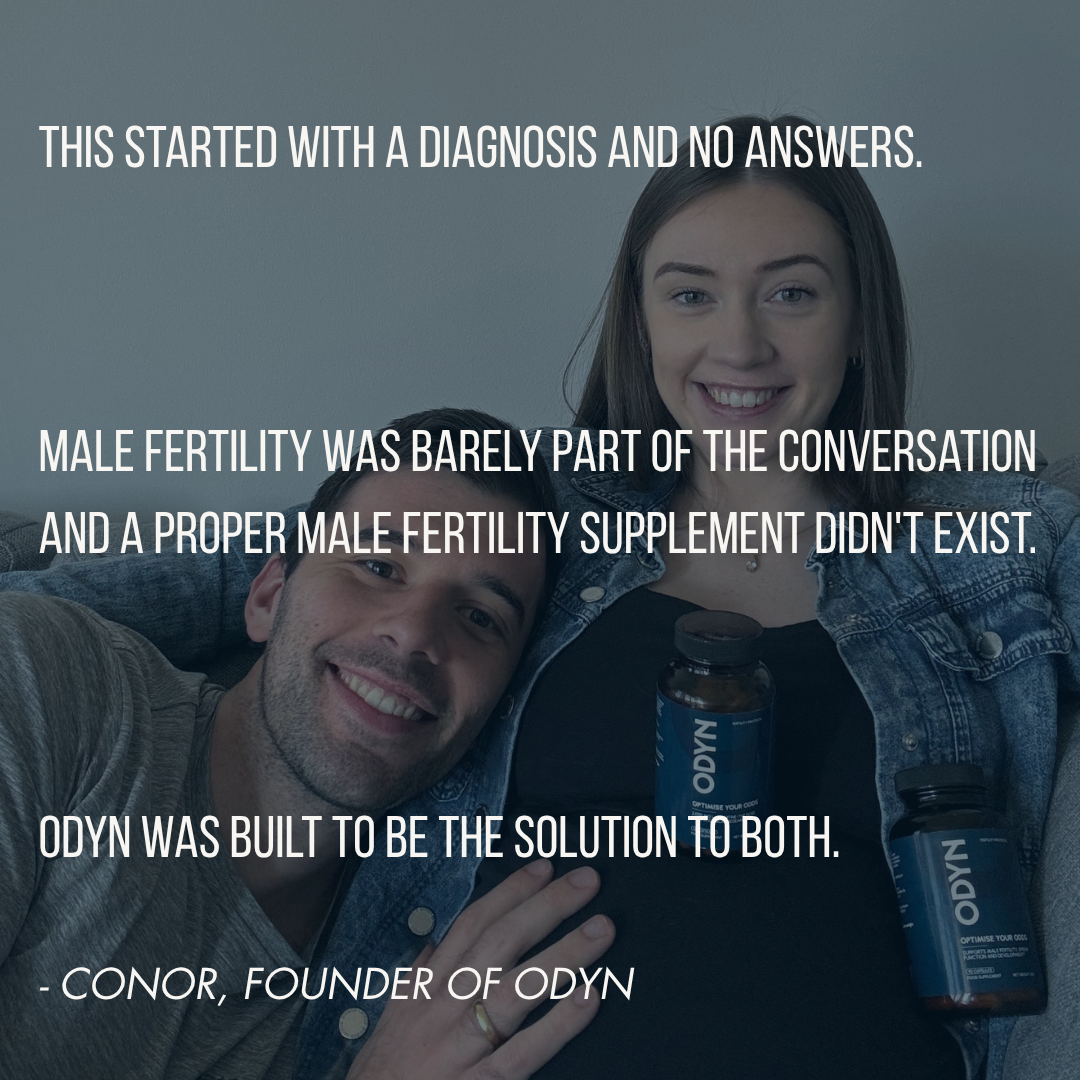
ODYN was created because I struggled to find a fertility supplement that actually aligned with the research.
Instead of packing dozens of ingredients into one formula, the focus was on a smaller number of well-studied nutrients at clinically meaningful doses.
The ODYN Fertility Protocol includes 10 key ingredients, such as:
- L-Carnitine 2,000 mg
- CoQ10 300 mg
- Lycopene 25 mg
- Zinc 25 mg
- Selenium 200 mcg
alongside supporting nutrients such as Vitamin C, Vitamin E, Vitamin D, Folate and B12.
The protocol is also structured around a 90-day timeframe, reflecting the natural sperm development cycle.
Explore the full formulation here:
The takeaway
Male fertility supplements can play a role in supporting sperm health.
But the ingredient list alone doesn’t tell the whole story.
What often matters most is:
- whether the nutrients are supported by research
- whether they are included at meaningful doses
- whether they are used consistently over enough time
Because when it comes to fertility, biology follows its own timeline.
And understanding that timeline is often the first step toward making better decisions.
How long does it take to improve sperm quality?
Frequently asked questions
What supplements help sperm health the most?
Several nutrients have been studied in relation to sperm health, including L-Carnitine, CoQ10, Zinc, Selenium, Vitamin C, Vitamin E, and Lycopene.
How long do fertility supplements take to work?
Sperm take roughly 74 days to develop, which means improvements in sperm quality typically appear after 2–3 months of consistent supplementation and lifestyle changes.
Are more ingredients better in fertility supplements?
Not necessarily. In many cases, formulas with very long ingredient lists end up including each nutrient at very small doses.